 Fami
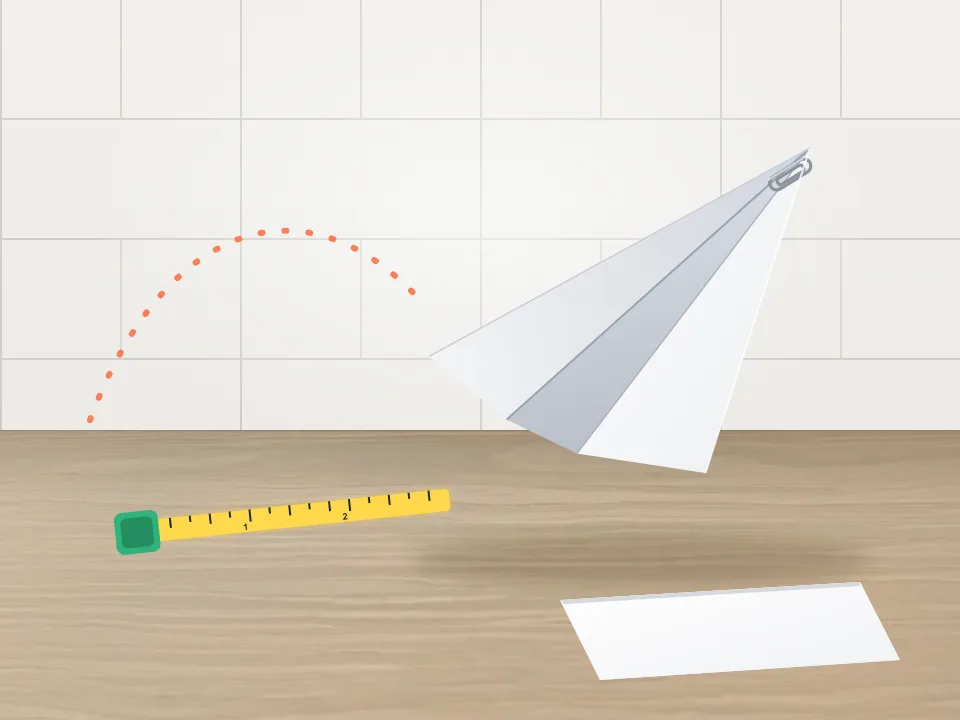
The paper plane that flies further
Fold a plane, throw it three times and find out what makes it fly further.
Materials
- 2A4 sheets of paperor Magazine or newspaper pages
- 1Metal paper clipor A small lump of modelling clay
- 1Tape measureor Count floor tiles or steps
- 1Pencil and paper for notes
Step by step
- 1
Fold the sheet in half lengthways
Crease it well and open it again
- 2
Fold the 2 top corners into the centre
You get a point like a roof
- 3
Fold the edges into the centre once more
The point gets thinner and sharper
- 4
Close it in half and fold the wings down
Each wing 3 cm from the bottom edge. Both the same
- 5
Throw it 3 times and note how far it goes
Always from the same spot, with a gentle straight push
- 6
Put 1 paper clip on the nose and throw it 3 more times
Compare the distances: with or without the clip?
Result
With the clip it flies further!
Why does it happen?
The wings push the air down and the air pushes the plane up: that is lift. With no weight at the front, the nose rises too much, the plane slows down and drops. The clip moves the centre of gravity forward, keeps the nose down and the plane glides straight. If you bend the back of the wings slightly upwards, the nose rises again: try it.
For parents
The science, so you can answer
A paper plane glides: the wings lean on the air, and weight in the right place keeps it flying straight.
Four forces act on the plane: the push you give it (thrust), the air slowing it down (drag), its weight pulling down, and lift, which appears because the wings deflect air downwards and the air pushes the plane up in return. To fly steadily, the centre of gravity (the point where the weight balances) must be a little ahead of the middle of the wings. Without the clip it is too far back: the nose rises, the plane slows and drops. The clip moves it forward and the plane glides straight and further.
What they will ask you
«How does it fly without an engine?»
It doesn't fly like a real plane, it glides: you give it speed and then it comes down slowly because the wings lean on the air, like a falling leaf.
«If it is heavier, shouldn't it fall sooner?»
The clip weighs very little; what matters is where it is. At the front it keeps the nose down so the plane doesn't stall.
«Why does it sometimes climb and then drop?»
Because the nose rises too much: it loses speed, the wings stop holding it up and it drops. Pilots call it a stall.
«What about real planes?»
They use the same forces, but they have engines pushing all the time and huge wings. They also load luggage carefully so the weight sits in the right place.
In real life: Gulls and birds of prey glide the same way, without flapping; and on airliners the luggage is spread out so the centre of gravity stays in the right place.
Animated step by step
Follow it with your phone on the table: it pauses at the end of each step.